
Washington County Court Records After Arrest
The court-record path starts after the arrest and booking. An officer may book a person into the Washington County Justice Center on suspected offenses, warrants, or holds. The District Attorney for Colorado's 13th Judicial District then reviews reports and decides what charges to file, amend, reduce, or decline. Once a criminal case opens, the public court record is controlled by the court and clerk, not by the jail roster.
That split is important in Washington County because no official public online jail roster was located. The jail remains the best source for current custody, bond, release, transfer, and booking documents through the Washington County Sheriff's Office, whose official homepage identifies Sheriff Robbie Furrow as sheriff. Formal filed charges, hearing dates, warrants issued by the court, and dispositions are searched through CoCourts, the Washington County court page, or the clerk. For custody details, use Washington County jail inmate records; for booking photos, use the Washington County jail mugshots page.
Find Washington County Court Records
Colorado court records can be searched through the statewide court-record portal and through court clerk routes. Use Washington County, Colorado, as the county filter when the portal offers a court or county option. If a case has no online match, it may be too new, filed in another county or court level, sealed, protected, or still under prosecutor review.
- Search CoCourts by defendant name or case number.
- Use Washington County as the county or court filter when available.
- Compare the filing date, defendant name, and case number against jail or bond paperwork.
- Open the case result and review charges, events, hearing dates, bond entries, warrants, and disposition status.
- Contact the Washington County court clerk for copies, certified records, older files, or records not shown online.
The screenshot captured from CoCourts shows the statewide Colorado court record search entry used for Washington County case lookup.
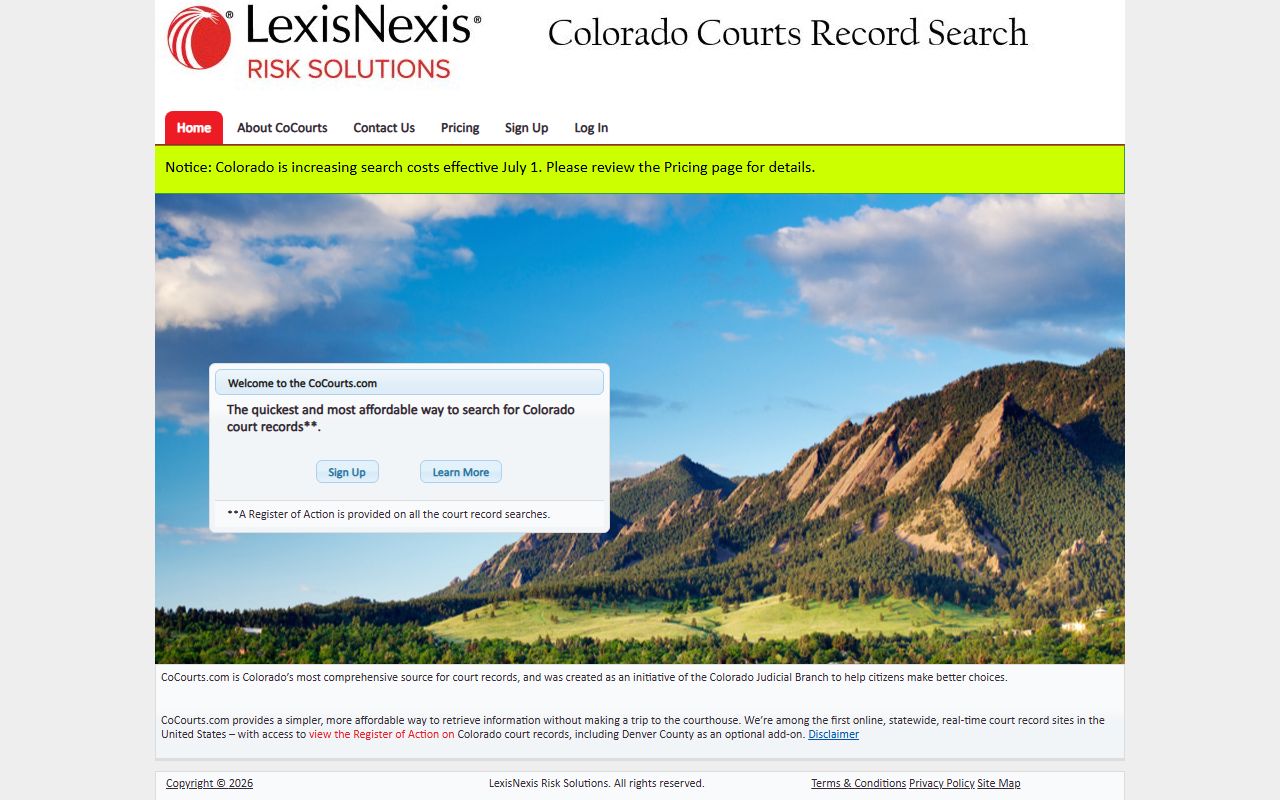
The portal is for court case records, not current jail custody. A person may have a case result even if the Justice Center says the person has been released.
Washington County Court Search Fields
The research captured a court search field inventory for Colorado case lookup. The best search key is a case number from bond paperwork, a summons, the clerk, or the jail. Name searches work, but spelling, initials, suffixes, and common surnames can produce missed or confusing results.
| Field Label | Type | Required | Notes |
|---|---|---|---|
| Party / Name | Text | One search method | Search by defendant name; spelling and middle initials matter. |
| Case Number | Text | One search method | Best if the jail, ticket, summons, clerk, or DA provides it. |
| County / Court | Dropdown | Optional filter | Select Washington County when available. |
| Date range | Date/filter | Optional | Useful when the arrest date is known. |
| Search | Button | n/a | Runs the public case search. |
Washington County Charging Documents
A booking charge is not the same as the charging document that opens or updates a case. The prosecutor may file fewer charges, add charges, change statutes, or decline a charge that appeared at booking. Court records after a Washington County arrest should be read from the filed charging document and later case events, not from the booking line alone.
| Document | Who Uses It | What It Means |
|---|---|---|
| Complaint | Prosecutor or law-enforcement filing path | Written criminal charge often used to begin prosecution. |
| Information | Prosecutor | Formal charging document commonly used for felony prosecution after review. |
| Indictment | Grand jury | Charge returned by a grand jury, usually for more serious or complex cases. |
| Warrant | Court | Order authorizing arrest or custody action, often after missed court or a new allegation. |
Washington County Charge Status
Charge status can change as the case moves. A filed charge may be amended, reduced, dismissed, deferred, tried, pleaded to, or sentenced. A court event may also show a bench warrant if the defendant misses court. The status shown in court records should not be treated as a conviction unless the disposition says there was a guilty plea, verdict, or other conviction outcome.
| Status | Plain Meaning |
|---|---|
| Pending | The case or charge remains open and has not reached final disposition. |
| Amended | The charge wording, statute, level, or count changed after filing. |
| Dismissed | The charge ended without conviction on that count. |
| Deferred judgment | A conditional outcome that may avoid final conviction if terms are completed. |
| Sentenced | The court imposed jail, probation, DOC, fines, or other conditions after conviction or plea. |
Bond After Washington County Arrest
Bond is part of the court process even though the jail may be the place families call first. At or after first appearance, a judicial officer may set release conditions based on the charge, appearance risk, public safety, warrants, criminal history, and statutory limits. The jail may know what is entered, but the court order controls. Verify bond the same day it will be posted because holds, amended orders, and new warrants can change release.
| Bond Type | How It Works |
|---|---|
| Personal recognizance | Release based on a promise to appear and obey conditions. |
| Cash bond | Money posted to secure appearance, with payment and refund rules controlled by the court or jail process. |
| Surety bond | A licensed bail agent posts bond for a fee under Colorado bail practice. |
| No-bond hold | Release is not available until court or agency action changes the hold. |
| Outside detainer | Another county, DOC, parole, federal, or ICE hold may prevent release after local bond. |
Bond law: CRS Title 16, Article 4 governs Colorado bail and release conditions.
Washington County Arrest Warrants
No official Washington County active-warrant public search or most-wanted list was located on the sheriff site during research. Warrant questions should be routed through the sheriff, court clerk, attorney, or public court case search. Do not assume that no online result means no warrant. A bench warrant can issue after missed court, failure to comply with a court order, probation issues, or other case events.
When a warrant leads to booking, the Justice Center may hold the person, but the court file explains why the warrant exists. An out-of-county or out-of-state warrant can also produce a local booking while the issuing jurisdiction controls the case. If a federal warrant is involved, the U.S. Marshals and federal court route may apply.
Charges vs Convictions
An arrest, booking entry, or filed charge is an allegation. A conviction requires a guilty plea, verdict, or other qualifying court outcome. Washington County court records after a jail arrest may show both allegations and final results, so each count should be read by status and disposition.
| Charge | Conviction | |
|---|---|---|
| Stage | Accusation filed or pending in court. | Final finding or plea on a count. |
| Proof level | Based on probable cause and prosecutor filing. | Based on plea or proof beyond a reasonable doubt. |
| Record use | Shows a case allegation and current status. | Shows adjudicated outcome and sentence if imposed. |
Sealed vs Expunged Records
Colorado arrest and criminal-record sealing is a court-order process. The Colorado Bureau of Investigation sealing guidance is the official state route identified in the research. Sealing changes public access to qualifying records, but it does not mean every private copy or old search result disappears at once. Juvenile, protected, and sealed cases may have much narrower public access.
| Sealed | Expunged | |
|---|---|---|
| Public access | Hidden or restricted from ordinary public view after court order. | More limited concept, often used for records treated as removed under specific law. |
| Colorado route | Use court and CBI sealing instructions for eligible arrests or cases. | Eligibility depends on record type and statute. |
| Old copies | May require separate update or removal requests. | Private republication may not update automatically. |
Restricted Washington County Court Records
Some records will not be fully visible online. Sealed cases, juvenile matters, protected victim or witness information, medical details, active investigations, security-sensitive material, and some document images may be withheld or redacted. The clerk can explain copy procedures, but the clerk cannot give legal advice. Certified dispositions and copy fees should be checked through the court's current process.
The Washington County court page screenshot in the project image set comes from the Colorado Judicial Branch Washington County court page.
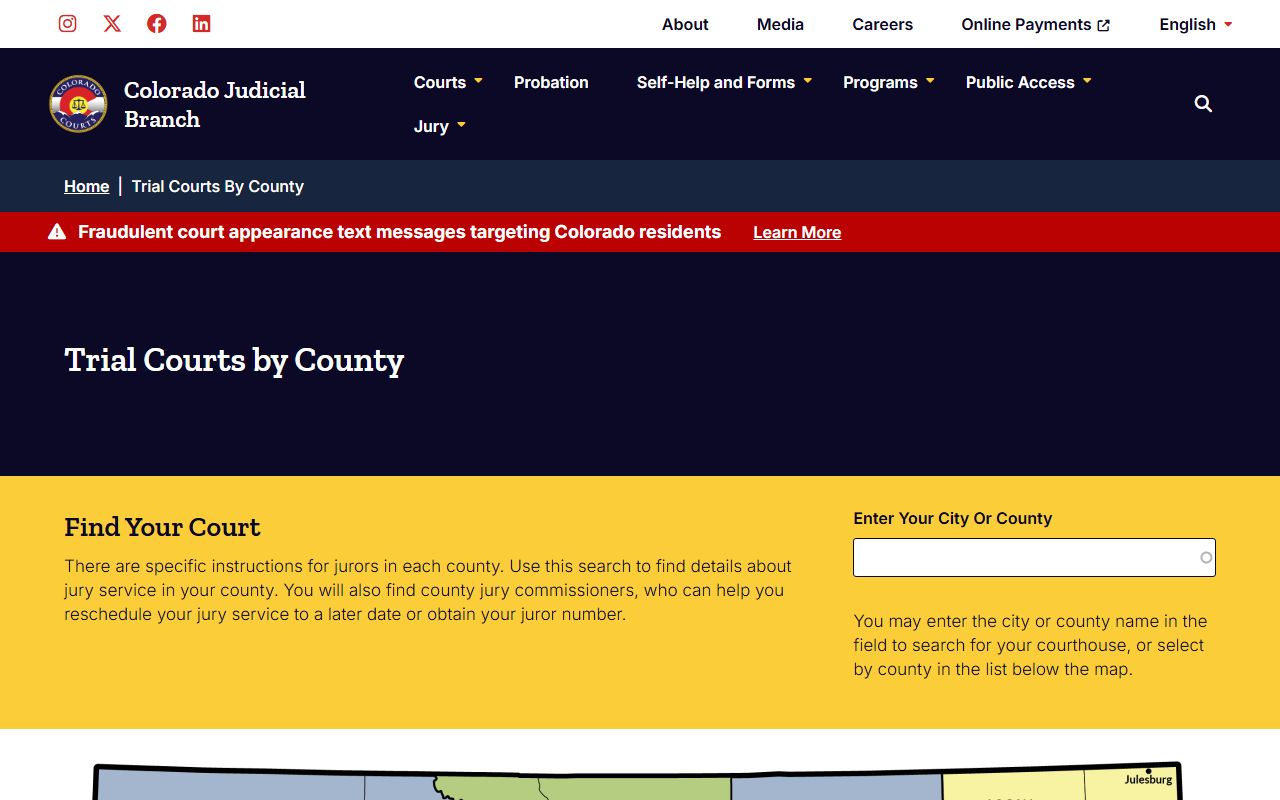
Use the court page for the local clerk route when CoCourts does not answer a case-copy, certification, or newly filed case question.
Important: Casual court lookups are not FCRA background checks and should not be used for employment, tenant, credit, or insurance screening.